Thursday, July 29, 2010

Supercross Motorcycle Racing - Must Have Safety Equipment


For motorcycle mania, there is a lot of kind motorcycle to get and to ride on. Supercross or motocross is one of kind familiar sports motorcycle that we known, especially for people that who loves in the fast lane. As I said before, supercross racing is a popular sport. Supercross motorcycle racing takes place indoors, on man-made tracks. We can see that supercross racer goal is not only to be a motorcycle master, but also to come in first.

As previously mentioned, supercross racing takes place indoors. For the newbie supercross racer, you will find that supercross motorcycle track is difficult to race on, some times there is an accident would happen when you riding on it. So, when it comes to get started with supercross race, it's need to consider to buying a good safety equipment and supplies for supercross motorcycle racing. You can purchase any necessary safety gear at motorcycle market place.

If you are just getting started with these supercross motorcycle race, you are advised to purchase as much safety equipment as you possibly can. You need to ensure that you are safe and protected, especially if you are newbie for these vehicle and first learning to maneuver an off-road bike on an off-road track. But when you gain your experience, you may able to shed some of your safety equipment.

As previously mentioned, when it's your first starting out in off-road supercross race, it is advised that you get as much safety motorcycle gear as you possibly can. These safety equipment should included motorcycles clothing, a good helmet, goggles, motorcycle boots, gloves, chest protector, also knee braces and back braces. If and when you need to purchase supercross safety equipment, you need to purchase it around the same time that you purchase your motorcycle. Well, I can see that you are ready on supercross race now. My advise, when you ready with your supercross motorcycle and the safety equipment, go getting started in supercross race and go for the eyes

How Wet Motorcycle Nitrous Kits Work


A popular type of nitrous kit that can be used for a motorcycle is a wet type of system. This is a type of kit that will work with both nitrous and fuel to help with adding to the horsepower of a motorcycle's engine. It is a system that works especially well with turbo engines and other engines that are supercharged.

A wet motorcycle nitrous kit is a set that works with a single nozzle to handle nitrous and fuel at the same time. What happens is that the two materials will move through the same nozzle to move through the nitrous set. The amount of fuel that is handled will be determined by a series of tuning jets that work to measure the fuel that comes into the set.

As the two materials move through the system the fuel and air that comes through the set will become distributed through the fuel injection system of the motorcycle. When this set is used the upper intake of the motorcycle will become wet in that it will be covered in fuel. This works to get the intake to use the fuel properly.

This type of kit is best for motorcycles that feature intakes that can handle wet flows. Turbo engines that can handle substantially high increases in horsepower can also use one of these kits to its advantage.

A major advantage of this type of motorcycle nitrous kit is that a wet kit will be more powerful. Some sets can work with helping to get hundreds of additional horsepower added to a motorcycle's engine. There is a problem with this though in that this type of motorcycle nitrous kit is going to be more expensive than another type and can be very difficult to get installed.

Suzuki Motorcycles and Motorcycle Accessories


Suzuki is one of the top four motorcycle manufacturers in the word. They have a wide variety of motorcycles to choose from, including the following most popular:


Diamond Free

The Diamond Free made the world take notice of Suzuki by winning the Climb at Mount Fuji Hill in 1953.

X-6 Hustler

The X-6 Hustler was the company's first street-legal performance bike. It was introduced in the mid 1960's. This bike was the fastest 250cc bike during this time.

Titan/GT750/RG500

The Titan was a 500cc model bike. The Titan was the predecessor to the GT750, a two-stroke motorcycle that reached up to 110mph, going from 0mph to 60mph in five seconds. Following the GT750, Suzuki introduced a larger version of that same bike, the RG500. The RG500 ended up being the most successful racing bike of that time period.

XN85/GSX-R

The XN85 motorcycle that was introduced in the 1980's won many races, including the first World Motocross Championship won in America. Following that, the next turbo-charged racing bike offered by Suzuki was called the GSX-R. This motorcycle had an aluminum frame which made it the lightest motorcycle in this class.

Various motorcycle reviews showed that Suzuki dominated the motorcycle racing circuit for a time, especially after winning the World Motocross Championship six times in the 1970's. In the late 70's, Suzuki successfully redesigned their four stroke models to meet new emissions regulations. Sales for Suzuki continued to soar.

In addition to the racing circuit, Suzuki did well in the cruising market. They introduced the Boulevard. This five-speed transmission model bike came in many different sizes. This was an attractive, extremely comfortable motorcycle that offered a very smooth ride no matter how long or on what terrain you traveled. It was priced right at just over $12,500. Their addition of the Boulevard and other cruising model bikes made the Suzuki brand motorcycle attractive to Mrs. Motorcycle, just as the racing bikes did for Mr. Motorcycle.

You can find a Suzuki at well over a thousand motorcycle dealers. They have a great twelve month warranty that affords unlimited miles, no deductible, and other perks. There is a large assortment of motorcycle accessories available from Suzuki as well. These accessories are available at many brick and mortar stores, as well as many online retail sites

Streetfighter Motorcycle Styles Around the World


The age-old question has been asked more and more lately. What defines a Fighter? Well, depending how many people you ask, you'll typically get that many different answers. We'll get the obvious out of the way. Sport oriented motorcycle removed of anything unnecessary to its function. Typically stripped of most bodywork, fitted with higher rise handlebars, smaller, lighter parts to reduce weight and as much performance mods as available to make it wicked fast. So now that we have the basic idea in our head, I'd like to expand on this view of how fighters are perceived around the world.

Let's start with the motherland of Streetfighters. The grand old U.K. Home to Big Ben, Fish and Chips, Teatime and the Queen Mum. Some will argue it started back in the '50's with the Café racer. Some say true fighters begin in the early '80's with the bike messengers fighting London traffic and marring their fairings. Bike messengers don't exactly make grand salaries so instead of replacing their war torn bodywork, they simply removed them.

The basic style has remained constant over the decades. Remove fairings, add flat bars, secure dual spot headlights, and kick up the tail. For the most part the styling has remained somewhat reserved. Swap your tail section for some more attractive OEM unit from another model. Some trick paint and polish. Maybe update the running gear for the latest and greatest in go fast hardware. To top it all off, we tear the motor out and either build some octane-snorting monster or replace it all together for the biggest fastest lump that will fit.

Some things never change. There has been some crossbreeding of the genres as of late. Longer lower bikes are starting to become more popular. Not exactly slammed but set for better launch control. Also, Paint has gotten more detailed with large murals and wild colors. The drag racing scene has more them likely brought on this new trend. But also we see some return to the old school with some retro styled Café fighters. Embracing history in a very positive way.

Next we move across the channel to Germany. Fast Luxury cars, Cold Beer, Hot Bratwurst and Lederhosen, huh!? OK, the later probably isn't as prominent but it made you laugh right? Now here is a scene that pulls out all the stops. Mad amounts of Polish and Chrome, Extreme amounts of Custom Billet parts, Big Horsepower motors, Wild almost demonic bodywork, Fat Rubber and paint that jumps off the sheet metal.
Walking into a Fighter show here looks like a Candy colored Horror movie. Maybe Rob Zombie should have a look into this.

Maybe not the originators, but definitely innovators.

And here we can definitely start dissecting the genre. Here we can see a lot of unique ideas that started in this area, but there's also some Euro Cruiser/ Chopper inspiration as well. Fork tube covers are becoming more present. These covers usually smooth out the front end to make more of a seamless tube from top to bottom. Some have even gone as far as to machine grooves and designs in them to add a little extra flash to the front of the bike. More influence from the custom scene is found in dressing up the cables with bright braided lines, cleaner shinier engine covers, Stylized billet grips, Hidden axle covers, integrated handlebar risers and clamps. The list goes on forever.

Their big claim to fame being the very exaggerated tail heights compounded by short tail lengths. And the crazy looking bodywork that has got the Fighter world wanting more. Very sculpted and aggressive looking. And going along with sculpture in motorcycles is some of the tank mods that look like they were pulled from scenes of a Friday the 13th movie.

Tire size seems to be getting wider and wider around the world, but instead of just focusing on the rear tire they are paying just as much attention to the front. Widening the front wheels to except rear tire widths. 180's and 190 section tires matched with 240 and larger rears. Bringing a whole new look to the fat tire game.

If we head north we find the Nordic fighters. The land of the long night brings out some seriously mean bikes when the ice thaws. With less then 6 months of daylight let alone favorable riding weather this leaves a lot of time to tinker in the shed.
These new age Vikings like to go FAST!!!

Turbos are not uncommon when they start building fighters. And with the ever-growing drag racing scene building in the warmer months long and low goes along with the fast and mean theory.

What is neat is some of the paint schemes that come along with these bikes. Leaning a bit towards the American Hot Rods of yore Flames are most notable. Although, it's not necessarily traditional flames. Some opt for tribal licks or lay them out in candy and flake.

But the other scene that's gaining ground is Stunt riding. MX bars, cages, 12 bars, hand brakes strapped to naked bikes and adorned with all the sponsors and eye catching paint they can get.

The Land Down Under is stepping up the game with some very clean and tasty fighters. They have some of the very well engineered and eye-catching fighters I have seen. Adopting some global fighter styling, but also putting the Aussie spin on it. Very unique ideas and adaptations are happening. It's a good mix of English cleanliness along with German extreme. Big power bikes are definitely abundant along with a healthy dash of polish and bling.

Here in the Good old USA and our friends to the North, Canada, the Fighter scene came to be by way of the stunt world. Once again form followed function when plastic got shattered learning all the crazy tricks and combos.
Some felt they had more maneuverability and control on a naked stunter as apposed to a fully faired bike. Soon naked bikes started popping up more and more.

Some saw a resemblance to the chopper crowd, but liked the power and handling of a sport bike as apposed to the lumbering sled of a cruising machine.

Others grew up on the pegs of a dirt bike and felt the natural switch to big bars and tall seats.

Others remember the hey day of the Jap invasion and wanted to recreate the classic CB's, GS' and KZ'. Some just felt the need to stand out in the crowd and build something different.

We are also taking bits and pieces from around the globe and making our own style.

From caged and barred stunters to lean mean hooligan machines to full on customs that rival any big bank account chopper.

Can a Turbo Be Installed to a Superbike?


Around half of the world's entire population, including both males and females and even the ones in between, are already hooked up on bikes, and mind you, these bikes are not the ones most people used to know way back in kindergarten or grade school.

What they dig are superbikes - bikes that are real flashy monsters when it comes to hitting the racetracks. And for anyone who loves to race and is dying for the rush racing gives, superbikes, with their powerful engines capable of speed that can raise hell, are no doubt a dream to have under one's roof.

There is just one problem, however. Superbike enthusiasts just cannot get enough, and are constantly in need of more speed; and as of late, the most tempting solution to this is the turbo. Installing turbochargers seems to be a promising way of enabling superbikes to achieve speeds that do not only raise hell, but also do blow it away. Or is it really?

It will be good to remember first what superbikes basically are. Superbikes were developed as an improvement of super sport bikes. Both are especially engineered for race track performance, the only difference is that superbikes are equipped with larger engines with sizes that vary from 800 cc to 1,200 cc. A usual superbike can bear a maximum of 480 lb, and can produce around 180 bhp. Superbikes are perhaps well-known because of the Superbike Racing, a category under motorcycle racing joined by modified production motorcycles. One thing should be remembered: superbikes belong to the racetracks. This explains why there is always a need for more speed.

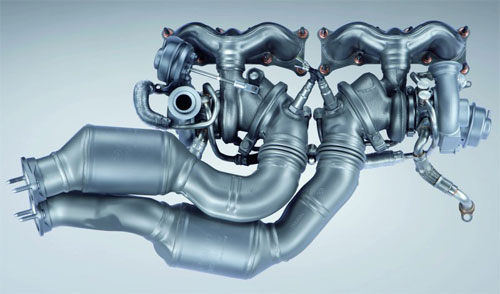
Now, the crucial question: Can superbikes be fitted with a turbo? The answer is yes. Turbochargers do increase the performance of a motorbike's engine, resulting in around 40 percent more horsepower, minus the much additional weight. The turbo produces more power by escalating the density of air that passes trough the engine. Another interesting is that turbo systems can either be carbureted or fuel-injected, so anyone really has a choice.

In fact, motorbike turbocharger is making remarkable developments in the motor industry. The new Suzuki Hayabusa GSX1300R released this year boasts of digital fuel injection that works with its 1, 340 cc DOHC engine, and with a technology such as this, no wonder the new darling is getting praises here and there. Larry James, of James Racing, even said that turbo systems work well with that model.

No matter how reliable turbo systems are, there are still some things about turbochargers that anyone must be wary of. There is such a thing called turbo lag, a delay between the twisting the throttle and the turbo finally kicking in that can easily be noticed by most riders. This happens because the exhaust system takes time to drive the turbine to high pressure and for the rotor to beat its rotational inertia and attain the speed required for supplying the boost pressure. The lag can be reduced anyway, so there really is no reason to not go for turbochargers. To do so, all that should be done is to use lighter parts that will make the spin-up happen sooner. Another option is to change the turbine's aspect ratio which will decrease the diameter and increase the width.

Turbo Motorcycles and Turbo Lag Challenges


Back in the 1990s Yamaha produced a rather interesting motorcycle, it was turbo-charged, and while it was not the fastest off the line, once that turbo kicked in; whooyah! What a rush indeed, still there were things that initially bothered me a little bit with that motorcycle.

It had a little turbo-lag, and mind you, I was used to turbo-lag because I'd previously owned several vehicles with turbo power. Once I had an off-road Turbo Toyota Pick-up in fact, which was fun to listen to it whistle as I accelerated and it actually had some decent power. The Turbo Lag was about 3-seconds on that truck.

Yet, on the Yahama Motorcycle with a turbo, I didn't like it because you'd give it the throttle and then you'd get an extra boost 2-4 seconds later and it would race the RPM up to redline, while it was accelerating. Sometimes, in a straight line for instance it was totally cool, really felt awesome and when speed shifting with the hydraulic clutch, you could run through the gears extremely fast.

Unfortunately, and this happened a few times during some canyon runs (racing through the mountains with your knee scraping the corners) in the Santa Monica CA mountains, I set up for the corner fed in the throttle as always and the F-turbo started kicking in, so, if I up-shifted I'd be going too fast, if I hit the brakes, I'd drift out of the corner. Holy crap! Even when I got used to it, I never liked it, things happen too fast, turbo lag is not cool on a sport racing bike.

Of course, like anything that engineering challenge was solved, but I had sold the bike to friend, who eventually also sold it for about the same reason. Please consider all this

Tuesday, July 27, 2010

The Best Motorcycle Battery Tender Chargers


you've been searching for battery chargers for quite some time now, you've definitely came across the Battery Tender brand. If you haven't, I don't know if you're hiding under a rock, or you just haven't come across the brand. Regardless of the fact, they are probably one of the most popular brands on the market. They have fantastic reviews, great prices, as well as features that many other brands just don't carry.

Now, before you head out, whip out your wallet, and purchase one, there are some thing that you should know about them. I wanted to show you what sets them above the rest. You're soon going to find out that they are one of the best chargers that money can buy. No, it isn't going to cost you $250 to purchase one, nor will they break down in the next 6 weeks.

  • A great warranty: A good company is always going to stand behind it's product. This is what Battery Tender has done here. Just about every product that they carry, they have a great 5-10 year warranty. If something goes bad and it's their fault, you will find that they will most likely fix it up.
  • Great features: One of the most common problems that many motorcycle owners come across is that they overcharge their battery, just causing damage. With some of their features, you're going to be able to know when the battery is charged, as well as an auto shut off. No longer will you have to worry about your battery getting damaged!
  • Great reviews: I generally get a good idea on if a product is good or not just by reading the reviews. The reviews online are fantastic for any battery tender product. What I have found is that they have a ton of products, all recieving great reviews