Thursday, July 29, 2010

Supercross Motorcycle Racing - Must Have Safety Equipment


For motorcycle mania, there is a lot of kind motorcycle to get and to ride on. Supercross or motocross is one of kind familiar sports motorcycle that we known, especially for people that who loves in the fast lane. As I said before, supercross racing is a popular sport. Supercross motorcycle racing takes place indoors, on man-made tracks. We can see that supercross racer goal is not only to be a motorcycle master, but also to come in first.

As previously mentioned, supercross racing takes place indoors. For the newbie supercross racer, you will find that supercross motorcycle track is difficult to race on, some times there is an accident would happen when you riding on it. So, when it comes to get started with supercross race, it's need to consider to buying a good safety equipment and supplies for supercross motorcycle racing. You can purchase any necessary safety gear at motorcycle market place.

If you are just getting started with these supercross motorcycle race, you are advised to purchase as much safety equipment as you possibly can. You need to ensure that you are safe and protected, especially if you are newbie for these vehicle and first learning to maneuver an off-road bike on an off-road track. But when you gain your experience, you may able to shed some of your safety equipment.

As previously mentioned, when it's your first starting out in off-road supercross race, it is advised that you get as much safety motorcycle gear as you possibly can. These safety equipment should included motorcycles clothing, a good helmet, goggles, motorcycle boots, gloves, chest protector, also knee braces and back braces. If and when you need to purchase supercross safety equipment, you need to purchase it around the same time that you purchase your motorcycle. Well, I can see that you are ready on supercross race now. My advise, when you ready with your supercross motorcycle and the safety equipment, go getting started in supercross race and go for the eyes

How Wet Motorcycle Nitrous Kits Work


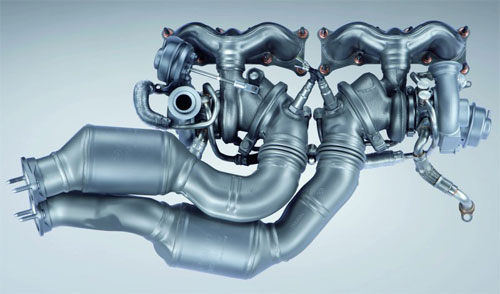
A popular type of nitrous kit that can be used for a motorcycle is a wet type of system. This is a type of kit that will work with both nitrous and fuel to help with adding to the horsepower of a motorcycle's engine. It is a system that works especially well with turbo engines and other engines that are supercharged.

A wet motorcycle nitrous kit is a set that works with a single nozzle to handle nitrous and fuel at the same time. What happens is that the two materials will move through the same nozzle to move through the nitrous set. The amount of fuel that is handled will be determined by a series of tuning jets that work to measure the fuel that comes into the set.

As the two materials move through the system the fuel and air that comes through the set will become distributed through the fuel injection system of the motorcycle. When this set is used the upper intake of the motorcycle will become wet in that it will be covered in fuel. This works to get the intake to use the fuel properly.

This type of kit is best for motorcycles that feature intakes that can handle wet flows. Turbo engines that can handle substantially high increases in horsepower can also use one of these kits to its advantage.

A major advantage of this type of motorcycle nitrous kit is that a wet kit will be more powerful. Some sets can work with helping to get hundreds of additional horsepower added to a motorcycle's engine. There is a problem with this though in that this type of motorcycle nitrous kit is going to be more expensive than another type and can be very difficult to get installed.

Suzuki Motorcycles and Motorcycle Accessories


Suzuki is one of the top four motorcycle manufacturers in the word. They have a wide variety of motorcycles to choose from, including the following most popular:


Diamond Free

The Diamond Free made the world take notice of Suzuki by winning the Climb at Mount Fuji Hill in 1953.

X-6 Hustler

The X-6 Hustler was the company's first street-legal performance bike. It was introduced in the mid 1960's. This bike was the fastest 250cc bike during this time.

Titan/GT750/RG500

The Titan was a 500cc model bike. The Titan was the predecessor to the GT750, a two-stroke motorcycle that reached up to 110mph, going from 0mph to 60mph in five seconds. Following the GT750, Suzuki introduced a larger version of that same bike, the RG500. The RG500 ended up being the most successful racing bike of that time period.

XN85/GSX-R

The XN85 motorcycle that was introduced in the 1980's won many races, including the first World Motocross Championship won in America. Following that, the next turbo-charged racing bike offered by Suzuki was called the GSX-R. This motorcycle had an aluminum frame which made it the lightest motorcycle in this class.

Various motorcycle reviews showed that Suzuki dominated the motorcycle racing circuit for a time, especially after winning the World Motocross Championship six times in the 1970's. In the late 70's, Suzuki successfully redesigned their four stroke models to meet new emissions regulations. Sales for Suzuki continued to soar.

In addition to the racing circuit, Suzuki did well in the cruising market. They introduced the Boulevard. This five-speed transmission model bike came in many different sizes. This was an attractive, extremely comfortable motorcycle that offered a very smooth ride no matter how long or on what terrain you traveled. It was priced right at just over $12,500. Their addition of the Boulevard and other cruising model bikes made the Suzuki brand motorcycle attractive to Mrs. Motorcycle, just as the racing bikes did for Mr. Motorcycle.

You can find a Suzuki at well over a thousand motorcycle dealers. They have a great twelve month warranty that affords unlimited miles, no deductible, and other perks. There is a large assortment of motorcycle accessories available from Suzuki as well. These accessories are available at many brick and mortar stores, as well as many online retail sites

Streetfighter Motorcycle Styles Around the World


The age-old question has been asked more and more lately. What defines a Fighter? Well, depending how many people you ask, you'll typically get that many different answers. We'll get the obvious out of the way. Sport oriented motorcycle removed of anything unnecessary to its function. Typically stripped of most bodywork, fitted with higher rise handlebars, smaller, lighter parts to reduce weight and as much performance mods as available to make it wicked fast. So now that we have the basic idea in our head, I'd like to expand on this view of how fighters are perceived around the world.

Let's start with the motherland of Streetfighters. The grand old U.K. Home to Big Ben, Fish and Chips, Teatime and the Queen Mum. Some will argue it started back in the '50's with the Café racer. Some say true fighters begin in the early '80's with the bike messengers fighting London traffic and marring their fairings. Bike messengers don't exactly make grand salaries so instead of replacing their war torn bodywork, they simply removed them.

The basic style has remained constant over the decades. Remove fairings, add flat bars, secure dual spot headlights, and kick up the tail. For the most part the styling has remained somewhat reserved. Swap your tail section for some more attractive OEM unit from another model. Some trick paint and polish. Maybe update the running gear for the latest and greatest in go fast hardware. To top it all off, we tear the motor out and either build some octane-snorting monster or replace it all together for the biggest fastest lump that will fit.

Some things never change. There has been some crossbreeding of the genres as of late. Longer lower bikes are starting to become more popular. Not exactly slammed but set for better launch control. Also, Paint has gotten more detailed with large murals and wild colors. The drag racing scene has more them likely brought on this new trend. But also we see some return to the old school with some retro styled Café fighters. Embracing history in a very positive way.

Next we move across the channel to Germany. Fast Luxury cars, Cold Beer, Hot Bratwurst and Lederhosen, huh!? OK, the later probably isn't as prominent but it made you laugh right? Now here is a scene that pulls out all the stops. Mad amounts of Polish and Chrome, Extreme amounts of Custom Billet parts, Big Horsepower motors, Wild almost demonic bodywork, Fat Rubber and paint that jumps off the sheet metal.
Walking into a Fighter show here looks like a Candy colored Horror movie. Maybe Rob Zombie should have a look into this.

Maybe not the originators, but definitely innovators.

And here we can definitely start dissecting the genre. Here we can see a lot of unique ideas that started in this area, but there's also some Euro Cruiser/ Chopper inspiration as well. Fork tube covers are becoming more present. These covers usually smooth out the front end to make more of a seamless tube from top to bottom. Some have even gone as far as to machine grooves and designs in them to add a little extra flash to the front of the bike. More influence from the custom scene is found in dressing up the cables with bright braided lines, cleaner shinier engine covers, Stylized billet grips, Hidden axle covers, integrated handlebar risers and clamps. The list goes on forever.

Their big claim to fame being the very exaggerated tail heights compounded by short tail lengths. And the crazy looking bodywork that has got the Fighter world wanting more. Very sculpted and aggressive looking. And going along with sculpture in motorcycles is some of the tank mods that look like they were pulled from scenes of a Friday the 13th movie.

Tire size seems to be getting wider and wider around the world, but instead of just focusing on the rear tire they are paying just as much attention to the front. Widening the front wheels to except rear tire widths. 180's and 190 section tires matched with 240 and larger rears. Bringing a whole new look to the fat tire game.

If we head north we find the Nordic fighters. The land of the long night brings out some seriously mean bikes when the ice thaws. With less then 6 months of daylight let alone favorable riding weather this leaves a lot of time to tinker in the shed.
These new age Vikings like to go FAST!!!

Turbos are not uncommon when they start building fighters. And with the ever-growing drag racing scene building in the warmer months long and low goes along with the fast and mean theory.

What is neat is some of the paint schemes that come along with these bikes. Leaning a bit towards the American Hot Rods of yore Flames are most notable. Although, it's not necessarily traditional flames. Some opt for tribal licks or lay them out in candy and flake.

But the other scene that's gaining ground is Stunt riding. MX bars, cages, 12 bars, hand brakes strapped to naked bikes and adorned with all the sponsors and eye catching paint they can get.

The Land Down Under is stepping up the game with some very clean and tasty fighters. They have some of the very well engineered and eye-catching fighters I have seen. Adopting some global fighter styling, but also putting the Aussie spin on it. Very unique ideas and adaptations are happening. It's a good mix of English cleanliness along with German extreme. Big power bikes are definitely abundant along with a healthy dash of polish and bling.

Here in the Good old USA and our friends to the North, Canada, the Fighter scene came to be by way of the stunt world. Once again form followed function when plastic got shattered learning all the crazy tricks and combos.
Some felt they had more maneuverability and control on a naked stunter as apposed to a fully faired bike. Soon naked bikes started popping up more and more.

Some saw a resemblance to the chopper crowd, but liked the power and handling of a sport bike as apposed to the lumbering sled of a cruising machine.

Others grew up on the pegs of a dirt bike and felt the natural switch to big bars and tall seats.

Others remember the hey day of the Jap invasion and wanted to recreate the classic CB's, GS' and KZ'. Some just felt the need to stand out in the crowd and build something different.

We are also taking bits and pieces from around the globe and making our own style.

From caged and barred stunters to lean mean hooligan machines to full on customs that rival any big bank account chopper.

Can a Turbo Be Installed to a Superbike?


Around half of the world's entire population, including both males and females and even the ones in between, are already hooked up on bikes, and mind you, these bikes are not the ones most people used to know way back in kindergarten or grade school.

What they dig are superbikes - bikes that are real flashy monsters when it comes to hitting the racetracks. And for anyone who loves to race and is dying for the rush racing gives, superbikes, with their powerful engines capable of speed that can raise hell, are no doubt a dream to have under one's roof.

There is just one problem, however. Superbike enthusiasts just cannot get enough, and are constantly in need of more speed; and as of late, the most tempting solution to this is the turbo. Installing turbochargers seems to be a promising way of enabling superbikes to achieve speeds that do not only raise hell, but also do blow it away. Or is it really?

It will be good to remember first what superbikes basically are. Superbikes were developed as an improvement of super sport bikes. Both are especially engineered for race track performance, the only difference is that superbikes are equipped with larger engines with sizes that vary from 800 cc to 1,200 cc. A usual superbike can bear a maximum of 480 lb, and can produce around 180 bhp. Superbikes are perhaps well-known because of the Superbike Racing, a category under motorcycle racing joined by modified production motorcycles. One thing should be remembered: superbikes belong to the racetracks. This explains why there is always a need for more speed.

Now, the crucial question: Can superbikes be fitted with a turbo? The answer is yes. Turbochargers do increase the performance of a motorbike's engine, resulting in around 40 percent more horsepower, minus the much additional weight. The turbo produces more power by escalating the density of air that passes trough the engine. Another interesting is that turbo systems can either be carbureted or fuel-injected, so anyone really has a choice.

In fact, motorbike turbocharger is making remarkable developments in the motor industry. The new Suzuki Hayabusa GSX1300R released this year boasts of digital fuel injection that works with its 1, 340 cc DOHC engine, and with a technology such as this, no wonder the new darling is getting praises here and there. Larry James, of James Racing, even said that turbo systems work well with that model.

No matter how reliable turbo systems are, there are still some things about turbochargers that anyone must be wary of. There is such a thing called turbo lag, a delay between the twisting the throttle and the turbo finally kicking in that can easily be noticed by most riders. This happens because the exhaust system takes time to drive the turbine to high pressure and for the rotor to beat its rotational inertia and attain the speed required for supplying the boost pressure. The lag can be reduced anyway, so there really is no reason to not go for turbochargers. To do so, all that should be done is to use lighter parts that will make the spin-up happen sooner. Another option is to change the turbine's aspect ratio which will decrease the diameter and increase the width.

Turbo Motorcycles and Turbo Lag Challenges


Back in the 1990s Yamaha produced a rather interesting motorcycle, it was turbo-charged, and while it was not the fastest off the line, once that turbo kicked in; whooyah! What a rush indeed, still there were things that initially bothered me a little bit with that motorcycle.

It had a little turbo-lag, and mind you, I was used to turbo-lag because I'd previously owned several vehicles with turbo power. Once I had an off-road Turbo Toyota Pick-up in fact, which was fun to listen to it whistle as I accelerated and it actually had some decent power. The Turbo Lag was about 3-seconds on that truck.

Yet, on the Yahama Motorcycle with a turbo, I didn't like it because you'd give it the throttle and then you'd get an extra boost 2-4 seconds later and it would race the RPM up to redline, while it was accelerating. Sometimes, in a straight line for instance it was totally cool, really felt awesome and when speed shifting with the hydraulic clutch, you could run through the gears extremely fast.

Unfortunately, and this happened a few times during some canyon runs (racing through the mountains with your knee scraping the corners) in the Santa Monica CA mountains, I set up for the corner fed in the throttle as always and the F-turbo started kicking in, so, if I up-shifted I'd be going too fast, if I hit the brakes, I'd drift out of the corner. Holy crap! Even when I got used to it, I never liked it, things happen too fast, turbo lag is not cool on a sport racing bike.

Of course, like anything that engineering challenge was solved, but I had sold the bike to friend, who eventually also sold it for about the same reason. Please consider all this

Tuesday, July 27, 2010

The Best Motorcycle Battery Tender Chargers


you've been searching for battery chargers for quite some time now, you've definitely came across the Battery Tender brand. If you haven't, I don't know if you're hiding under a rock, or you just haven't come across the brand. Regardless of the fact, they are probably one of the most popular brands on the market. They have fantastic reviews, great prices, as well as features that many other brands just don't carry.

Now, before you head out, whip out your wallet, and purchase one, there are some thing that you should know about them. I wanted to show you what sets them above the rest. You're soon going to find out that they are one of the best chargers that money can buy. No, it isn't going to cost you $250 to purchase one, nor will they break down in the next 6 weeks.

  • A great warranty: A good company is always going to stand behind it's product. This is what Battery Tender has done here. Just about every product that they carry, they have a great 5-10 year warranty. If something goes bad and it's their fault, you will find that they will most likely fix it up.
  • Great features: One of the most common problems that many motorcycle owners come across is that they overcharge their battery, just causing damage. With some of their features, you're going to be able to know when the battery is charged, as well as an auto shut off. No longer will you have to worry about your battery getting damaged!
  • Great reviews: I generally get a good idea on if a product is good or not just by reading the reviews. The reviews online are fantastic for any battery tender product. What I have found is that they have a ton of products, all recieving great reviews

Motorcycle Carrier - Best Way to Transport Your Motorcycle


hen it comes to transporting a motorcycle long distances, what should you do (other than actually riding a motorcycle, that is)? Consider using a motorcycle carrier.

These types of carriers are usually the choice of people who have to transport motorcycle units to a racing venue or an exhibition, as well as people who need to transport their motorcycles along with a lot of baggage they already have.

A motorcycle carrier (also known as a dirt bike carrier for you dirt bike owners) is a hitch-type carrier, which are attached to the back of a vehicle. Standard motorcycle carriers can handle standard bikes which are less than 500 pounds, including sports bikes and dirt bikes.

Most people choose carriers like these made of aluminum since they can be assured of a strong and durable carrier to safely transport their motorcycle units. Aluminum carriers are also lightweight, thus they don't add to the gasoline that will be needed in the ride.

If you need to transport bigger motorcycles, follow this advice when choosing a motorcycle carrier which will best suit you.

  • Look for expert's opinions or search for information online when choosing a carrier that would complement your motorcycle. Although there are a wide variety of motorcycle carriers, the Internet has plenty of websites which list down the features of each model and some of them even include motorcycle models they are best suited for.
  • Ask for assistance from the sales agent or counter sales people where you purchased the motorcycle unit.

Here are some tips to use the motorcycle carrier safely:

  1. Think about load limits vehicles involved. For the hauling vehicle, the structural and handling weight limits are determined by the original manufacturer, and must take into consideration the weight placed on the hitch carrier and consequently, the vehicle itself. For the hitch carrier, the weight limits vary. For example, Class 1 hitch can handle 200 pounds and Class 5 hitch 1700 pounds.
  2. Keep the weight at or less than the limit of the hitch carrier, and make sure that its tires are properly inflated. This would lessen the effect of pulling a carrier hitched to the back of a vehicle on the vehicle's handling.
  3. Unlike towing a trailer, pulling a carrier means making sure the loads at the rear of the vehicle are balanced and secured. Check if the carrier is perpendicular to the hauling vehicle's orientation because to lessen the pitching force motorcycle carriers can make during sudden stops or acceleration.
  4. Vertical stabilization bars can also be used in the carriers when transporting high bikes or ones with a high center of gravity. These motorcycles are hard to control by regular tie-downs often used in carriers

Which Motorcycle Makes the Best Touring Bike?


When you think of big touring motorcycles, do the big Harley Davidson cruisers easily come to mind? Or, does a big Honda Gold Wing with all of the doo-dads, lights and a trailer on the back make you think, "now, THAT'S a touring bike!" If either of these big bikes comes to mind, then you're not alone. But, are these two big touring bikes the last word on touring motorcycles?

Some motorcycle riders have to have a full fairing and windshield, while others insist upon a face full of pure air hitting their helmet at 80 miles per hour, no fairing and leather saddlebags holding a change of clothes and lunch. This can be a touring bike as well, but probably is not one that easily comes to mind.

Surely, there's got to be some middle ground - right?

To me, the truth surely does lie in the middle, as any motorcycle can be an ideal touring bike - your ideal touring bike. For me, I've had at least three ideal touring bikes - motorcycles that I put a lot of miles on through the years. The first one was a Honda 350 twin. You may snicker a bit, but to a young man on his first motorcycle, it was truly great.

Then came the Triumph Bonneville 650. Now, that was a great touring bike - as long as you didn't need to see how fast you were going, as that British twin engine vibrated so heavily at speed that the speedometer was virtually useless. But, it looked great, was very reliable, handled well and was a great touring motorcycle to me.

Now, your turn. What do you think makes a great touring bike? Do you ride alone, or do you usually have your wife or girlfriend on the back (but not both at the same time)? I always rode alone, but if you ride tandem, you will need a motorcycle with some power for two-up riding. Probably something on the 750cc + range would provide the power you need. Plus, two will need to haul twice as much stuff, so better add some type of motorcycle saddlebag to your ideal touring motorcycle.

Are you a wind-in-the face person? Then you'll probably want to avoid a fairing or a windshield. One word of warning here - if you like to ride any distance at all (beyond an hour or two in the saddle), than I suggest you add at least a windshield to your ideal tourer. If you've ever put more than a couple of hours in the saddle, then you know the fatigue a constant barrage of wind in the face will provide.

Are you a long-distance rider, or more of an around-town person? If you go the distance, better make a good riding posture a priority for your touring motorcycle. Some of the sit-upright bikes can prove tiresome on the highway as you hold on for dear life with an 80 mph wind constantly battering your chest. I always thought the BMW with its slightly forward sitting position as superbly comfortable. I would think that a crotch rocket could prove tiresome on long rides - no?

If you do most of your riding in town, then real comfort may not matter much. Without the wind pushing against your chest, a big cruiser Harley Davidson's upright posture is probably real nice - and it looks great.

Do you like to ride in cooler weather? As I discovered, completely open motorcycles (those without fairings or windshields) can be downright miserable in cool or wet weather. These motorcycles offer no protection, so at speed your body will take the full brunt of whatever weather you have. I remember riding for over three hours on a cold, wet Spring afternoon. I was soaked to the bone, and when I tried to dismount the bike, my muscles were so cold that I fell right over!

How about handling? Do you like to ride in a straight line, mostly on the highway, or do you like to hit the curvy portions of the road? That's called handling, and some of the big, low-slung cruiser bikes can be absolute elephants on roller skates in the twisties. For me, I like my motorcycle to be a "handler." I like to ride the curvy secondary country roads more than interstate highway jogs. But that's just me - some folks really like the straight-ahead cruising, and they may get nervous and uncomfortable in the twisties

Fresh Air


Motorbikes are dangerous aren't they? That's what they say! If you are a parent who's child has just purchased a scooter or moped, or you are a spouse or child of a partner or parent who has just started riding as part of their "midlife awareness program" then you may be justifiably worried. But is it justifiable?

The statistics show that over a 10 year period, between 1992 and 2002, there were 5562 fatalities (riders and passengers) out of a total of 279019 accidents (1.99%) (source: Department For Transport). Compare this to the fatalities of pedestrians (2.25% 10915 deaths out of 486111 accidents), and fatalities of car drivers and passengers (0.88% 19396 fatalities out of 2,202,341 accidents)

These statistics show that motorcycling is actually safer than crossing the road!!!! Although they also show that its safer to be in a car than it is to be on motorbike. In reality though can these comparisons be drawn on a like to like basis? Lets look at the volume of traffic on our roads. During the same time period, there were 22.5 million cars on our roads, 1 million motorcycles and around 1 million pedestrians. This means that we can forget about cars, because the fatality rate in car accidents is very small and not comparable to our other statistics. We have now shown that with similar volumes we can compare pedestrian fatalities with
motorcycling fatalities.

Looking at the statistics we can see that there were almost twice as many accidents involving pedestrians and the same in fatalities amongst them, when compared to motorcycle accidents. I think, therefore that its safe to say that motorcycling is safer than crossing the road - or is it? Pedestrians are always around, walking along footpaths and crossing the road - motorcycling on the other hand has become a seasonal leisure activity. The greatest number of motorcycle accidents and fatalities therefore occur during a shorter time span (between end of April and start of September). The conclusion must therefore be drawn that motorcycling is only as dangerous as crossing the road. On top of this, it must be noted that accidents and fatalities amongst pedestrians have seen a downward turn during the 10 year period we are talking about, and those amongst motorcycles have increased slightly (this is due to the increased interest in motorcycling as a leisure activity rather than just a means of transport).

I have owned and ridden motorcycles for 25 years, and cars for nearly 20. So are motorcycles dangerous? Well the obvious answer is of course they are, but only when in the wrong hands. By this I mean in the hands of a 16 year old with the typical teenage "I am unstoppable attitude", or the guy who's done an intensive "pass your test in a week" course and gone out and bought a sports bike, or the guy who has not ridden for 15 years and at 40 decides to go out and buy a sports bike or tourer (motorcycles have changed a lot in a short period of time - they are a whole lot faster, and mercifully a whole lot safer!!!)

When I started riding motorcycles, I needed a cheap method of transport. With just myself to think about and a father and much older brother who were also bikers, it was the obvious choice for me (I used to hero worship my brother and his gorgeous new blue 900cc Honda, and I used to ride pillion with him sometimes, which gave me a taste for it). That's just what it was a mode of transport to get from A to B. I didn't buy a bike because my mates each had one and we went for rides at the weekend - I needed to get to work, quickly, efficiently and at least possible cost. In 1984 there was no such thing as CBT (compulsory basic training) or a two part test in which you are followed by an examiner on a motorcycle with an intercom - in my test I pulled away from the test centre (remembering my safety checks) and rode back to the test centre in a circle via the roads my examiner had instructed me to use. I saw him when I pulled away from the centre and saw him just once more as I made the penultimate turn of the test. Needless to say I passed first time - it was easy and (when I think about it today) ridiculous.

In 1984 I did a voluntary road skills course called "Star Rider" which helped you learn how to control your bike. Since then the standards for motorcycle riding have far surpassed those for car drivers (I was a driving instructor 3 years ago and therefore I know this to be a fact). This is for all the right reasons, and remembering the statistics above it needed to happen. Another reason this needed to happen is this - in 1984 bikers started small and moved up the bike engine sizes slowly, I had a 100cc for 5 years, then moved up to 250cc where I stayed for 2 or 3 years before moving onto a 550cc. I then discovered cars, but after 3 years could not resist the pull of a motorcycle and I moved onto much bigger motorcycles - I had a 900cc Kawasaki, a Z1 - my dream bike.

In 2010 it is not the same - scooters and small motorcycles are for those under the age of 21. Those who suddenly decide to embark upon motorcycle ownership later in life generally learn on a 500cc machine, then once passed purchase an uber fast super sports machine, which they promptly go out and crash!!

Recently sales figures have shown that a third of all motorcycle sales are in the scooter sector - this means that people aged 16 to 21 are buying a third of all new motorcycles in the UK. This is also the largest sector of fatalities - the inexperience and arrogance of youth being the reason these kids crash and burn. The second largest sector of sales is in sports bikes - this is also the second largest sector for fatalities - the inexperience and arrogance of the middle aged "suit" who wants a toy. There seems to be a pattern emerging...

In the summer motorcycles are used more and more - it's a beautiful feeling, the freedom of being exposed to the elements, the wind in your face, the air around your body, the thrill of speed as you ride down some of Britain's amazing and fantastic roads, and then of course there are the bugs in your teeth and the wasps in your helmet!!! Believe me the latter is not a pleasant sensation!! Summer months also bring out the invincibility (or stupidity) factor - bikers start deciding "its too hot to wear leathers, or even jeans, I'll just leave this vest on and these shorts, stick my helmet on and go for a blast" - these are the people that come home in a box rather than on their bike!! A sad but very real fact.

I'm not saying that I've gone 25 years without an accident - I have had my fair share, but until recently nothing serious. When I first had a bike it was my only form of transport and therefore was used in all weathers - rain, hail, snow, ice, you name it. As I got older and had the income to own a motorcycle and a car it became more of a leisure activity, but was still my preferred form of transport (I would use it whenever I could) and about 9 years ago I actually went back to being an all weather biker and not owning a car. I had my fair share of spills, but given the weather etc I used to ride in, it was statistically to be expected. I grazed a few knees, ruined leathers, but I always got back on not having any bad injuries, that was until August 2006 when I had my first bad accident. It's a long story, but a boy racer cut across a road right in front of me and I hit a brick wall trying to avoid him. He drove off and I severely broke both my arms in the accident - this resulted in me losing my job as I could not work, being unable to pay bills, and after 18 months, losing my house, my partner and all of my confidence and self respect. Not a good result, plus I could not claim any insurance as the other driver had not stopped!!

At the time I had two bikes, a "work" one and my second ever Z1 (a picture of which accompanies this article). During the time after this accident I could not bear to part with my Zed and rode it as soon as my arms were better. Given what had happened in the time between the accident and me losing my house, I got to the point where I no longer cared about my own mortality and felt like I was alone so it was not an important issue. Rather foolishly one January morning in 2008 I could not sleep and decided I would take the Zed on an adventure. Motorcycling on the coldest Winters day can be the most exhilarating feeling ever - the temperature is the reason why, its so cold it makes the thrill even more thrilling!! I put my leathers on and enough layers to keep me warm, I packed myself a flask and some digestives (!!) and got on my bike. I was riding, aware it was icy, testing the "feel" of the bike to see if the roads were iced up or had been gritted. As I came to my first national speed limit road everything seemed fine. I opened her up a bit and she was fine so I went a little faster. I came to some bends I know well, having travelled the road all of my life, doing around 70mph, and I hit some black ice! As my baby (the Z1) tumbled thru the air, I rolled in gambols over the tarmac, end over end, thinking this really is the end. I lay prostrate on the road at 6am as my bike landed with a thump about a hundred yards away. I stood up, I was fine except for my ribs hurting. I looked at my bike, she looked ok. I ran over and jumped back on her, and tried to start her - when she wouldn't start I looked for the reason - half the engine had gone!! Luckily (although I dint think so at the time) she was the fatality in this accident and not me.

I have had time to sit and ponder that accident since and it could have been lethal. 5 minutes later and I would have been hit by the Morrisons lorry that turned into the road, as I gambolled along it at 70mph. I could have ended up with a very broken body lying behind a bush in a field in the dark, slowly painfully dying alone on that Saturday morning, lying undiscovered for hours. Its horrible to think about, and at the time it was the bike I wanted to survive not me. I'm glad it turned out the way it did though, because 4 months later my life was to turn around - I got a job, I moved to a new town where I bumped into the woman who became my wife and my life has taken a massive turn for the better

Is eBay the Number One Online Location For Kawasaki ATV Parts?


A big notice on a recent eBay bid read as follows, "Its Rusty But At Least Its Not Bent!". This was how this dealer decided to sell his Kawasaki ATV parts on eBay. The picture looked like exactly how it sounds. This stuff was junky looking. It was also very dirty and rusty. But that's not the best part. You couldn't just buy this guys junk online you had to get in line. I am a very impatient person by nature and could not place myself into this buying situation. There was a good chance that I would be outbid by someone else for these Kawasaki atv parts. One of the arms had a bolt rusted into the socket and his only positive selling point was that the part was not bent. I laughed. He could keep it for all I cared.

The next listing was almost as disappointing as my first. I found a Kawasaki Magneto cover for a 185 Bayou 4 wheeler. This product did not have any visible cracks in it. But it was covered in filth. It was a deal though. This guy only wanted 45 bucks for it but there wasn't much information to go with this part. He was unclear about what models this part would be compatible with. I had no idea either by looking at it. I would have no clue how to hook this up to any of my current vehicles.

This is how I spent an entire Saturday from morning till early evening. I perused through catalog listings on eBay looking for good parts to throw onto my busted ATV. How I cracked and dented the frame is another story I will save for another time. It's a good machine but its not ready for the scrap heap just yet. It needs some love and a little spit polish and it will be as good as new.

I came across some parts that looked like they had been in a fire. I have no idea why anyone would actually purchase some of these items. This was only my personal experience and I am sure it is different for everybody. Everyone has their own experiences when it comes to something like this. My suggestion is to go online and look for a parts dealer that has new OEM parts and that can offer you some sort of savings but also offer you new parts that are compatible. To me, this is what is missing on many of these bidding sites. There seems to be a lack of concern for customer service and quality of products. As a buyer I am pretty much left on my own to deal with some potentially bad customer situations. I would be on the look out for some better shopping environments.

2010 Kawasaki Vulcan 900 Review


If you love riding, and you're love of riding extends beyond high-revving fast and furious crotch rockets, then you will find something great in the simplicity of the 2010 Kawasaki Vulcan 900 line-up. All areas of interest are there: for those who love traditionally styled motorcycles, the Classic is a great choice; for those who live on the highway and need a motorcycle that echoes those sentiments, the Classic LT fits the bill nicely; for those who love aggressive styling, big wheels, and a deep throaty sound, the Custom is king.

Regardless of which one you choose, the ride and experience tells the same story.

My Love Affair with the 2010 Kawasaki Vulcan 900 Custom...

... began with a failed relationship, a broken evening, and tears streaming down my face. The bike was my one place of solitude, and it was a recent acquisition at that. I remember looking back on my first ride with sorrow, as I felt the experience tainted by the circumstances that surrounded that fateful evening.

I feel differently now. This motorcycle has brought out some qualities in me that I never would have even fathomed when I bought it: courage, pride, and most of all, joy. Riding this motorcycle is like your first kiss: the first twist of the throttle provides a rush that no other intoxication could ever match.

Its aggressive styling is mated to a 903cc v-twin that provides plenty of go-juice, while the bike itself remains intimate and responsive. You lean and the bike follows; you take a pothole and the bike forgives you. It's the best relationship you'll ever have, and all that it will ever ask in return is that you show it some love every now and again.

Reasons Why You Will Love the Vulcan Too

If the beautiful lines and tasteful chrome accents aren't enough for you, the sound the twin-pipes bellow out under acceleration may be the finishing touch. If that's not your forte, perhaps it's the relaxed maintenance schedule, lightweight design, or comfortable rider and passenger positions.

For most, I suspect, it will be the sheer dynamic the motorcycle brings to the table. It feels safe and secure from the moment you hop on, and every time you find a tunnel you will find yourself blipping the throttle to hear the sweet symphony it sings- I dare you to try to resist the urge.

Ultimately, it's in the ride that this bike truly shines. As beautiful as it is to look at, it is even more beautiful to pilot. In the end, that's what motorcycling is all about: enjoying the world around you in a far more intimate way than a car (even an expensive sports car) would ever allow. If that's not reason enough, hop on one and take it for a spin- you'll find your own reason to fall in love with the Vulcan.

2010 Suzuki Kizashi Full Test Review


spent a week driving a 6-speed manual AWD Kizashi GTS locally and beyond and came away impressed. We have found Suzuki's small cars and SUVs lively in spirit, especially the sporty AWD SX4s, and good in most ways;but we had no idea what to expect from their first foray into midsize sedan territory.

Aggressively styled and pleasingly proportioned, it previewed a semi-upscale "D-segment" sport sedan. In the global auto business, the C-segment is compact cars, and the size-up D class is what we know as midsize-the incredibly competitive field of both family and sporty sedans. And, with a powerful, aero-slick design theme characterized as "a dynamic athlete in motion," this concept clearly showed that Suzuki's coming flagship sedan would be aimed at the emotional end of the scale. Japanese automaker Suzuki chose the mid-2007 Frankfurt (Germany) Motor Show to unveil a most interesting new concept car called Kizashi. They said its name was Japanese for "prelude" or "foretaste" and that it foretold of something coming from a company known better here for its motorcycles, ATVs and outboard motors than for its small cars and SUVs.

An even more aggressive Concept Kizashi 2 followed at the October Tokyo Motor Show then a third variation debuted at the March, 2008 New York Auto Show. This one, Concept Kizashi 3, was much tamer and more production-realistic. It looked, in fact, a lot like the real thing is now hitting the market and demonstrated Suzuki was serious about taking on the well-established entries in the U.S. market's most competitive car class. Inside, the fits and materials are generally good, though not up to typical Euro-sedan standards, and the seats are handsome and nicely supportive with available leather trim. The instrument panel's major gauges have a precision look: Its faux brushed-aluminum-rimmed center stack mirrors the front grille's rounded-V shape, and its controls are intuitively easy to see, reach and operate. We especially appreciated the nicely padded three-spoke steering wheel with handy spoke-mounted audio and other controls.

The only engine residing beneath that power-dome hood for now is a willing 2.4-liter aluminum four good for 185 horses with a standard 6-speed manual transaxle, or five ponies fewer with the available continuously variable transmission (CVT). Rare in this size and price class, the option of Suzuki's latest "intelligent" all-wheel drive (i-AWD) can improve both bad-weather traction and cornering capability. The systems constantly variable front-to-rear torque split is a function of a number of factors, including wheel slippage, throttle and steering input.

Standard on the sub-$20K base Kizashi S are push-button start, steering wheel audio controls, dual-zone climate control and a split-folding rear seat with a pass-through for long objects such as skis. Standard safety features include Electronic Stability Program (ESP), anti-lock brakes with electronic brake-force distribution and a class-leading set of eight airbags.

The next-level SE adds the CVT automatic transmission, 17-inch tires on alloy wheels, a 10-way power driver?s seat with three-position memory, cruise control and leather wrapping on the steering wheel, shifter and parking brake lever. The sport-oriented GTS offers 18-inch wheels and tires, power moonroof, fog lamps, a 425-watt Rockford-Fosgate audio system with integrated Bluetooth hands-free phone capability and a choice of manual or CVT transmission, the latter with paddle shifters for manual gear selection. The top-of-the-line SLS features leather seating, three-stage heated seats, a four-way power passenger seat, heated mirrors, rain-sensing wipers, rear parking sensors and automatic on/off headlamps.

We spent 7 days driving a 6-speed manual AWD Kizashi GTS locally and beyond and came away impressed. We have found Suzuki's small cars and SUVs lively in spirit, especially the sporty AWD SX4s, and good in most ways-but we had no idea what to expect from their first foray into midsize sedan territory.

We found it less than plush yet surprisingly comfy and quiet, well put together and fun to drive. The manual gearbox shifted surely and crisply, and the 4-cylinder engine performed well at lower RPMs but tended to run out of breath at higher engine speeds. On-road handling was good, steering precise, and braking strong and stable as needed. A bit smaller inside and out than typical midsize sedans, it?s no limo but sufficient in back for full-size adults

The S1000RR - BMW Motorcycles in Good Stead For 2010


h major motorcycle markets such as the US suffering significant declines in sales in 2009, manufacturers will be looking to the post recession era with an eagerness to push boundaries while all parts of the industry, from accessories to bike insurance, will want to appeal to new potential customers. BMW will arguably be in a fantastic position to make the most of any positive trends in the industry, especially after acknowledging the manufacturer's comparably good performance (dropping only 22 percent, when the entire market fell by 41 percent) in the US over the last year.

The hotly anticipated S1000RR looks set to push boundaries and to really adopt the position of market front runner. Since its launch in 2008, 1,000 production models were made in the following year with the bike being taken to impressive success in the Superbike World Championship by Troy Corser in the Czech Republic and Ruben Xaus in Italy respectively.

2010, however, sees the first of the S1000RR to hit the dealerships - a development in the company that even the project leader, Stefan Zeit, hadn't anticipated when he suggested a BMW sport bike when he first took up the job and was subsequently assured that BMW would never produce one. The fact that the model looks to be the most powerful 1000cc bike on the market has got more than a few heads turned - and a few deposits already laid down too.

So what else does the S1000RR have to offer? Aside from being incredibly powerful, the model also boasts the best power-to-weight ratio available at 183 kg (400 lb) dry and 204 kg (450 lb) wet. There are also many electronic perks such as a ride-by-wire throttle and variable-length intake tracts - as well as optional extras including ABS and traction control. The model has also been noted for its digitally selected sport modes, rain, sport (up to 190 break horsepower), race and slick (for taking onto the track).

Adjustable suspension and ride height also makes each bike easily changeable for each individual rider - and its simplicity is commendable. The model has already entered into the market in high regard, and it seems unlikely that this bike will not remain at the top for some time

Motorcycle Cannonball - Coast to Coast Event For Pre-1916 Classic Motorcycles


On September 10, 2010 a handful of colorful people will be gathering in Kitty Hawk, NC with their ancient motorcycles and chase vehicles to embark on a ride of a lifetime across the United States of America on the Motorcycle Cannonball Run.

If you ride a 1970s classic BMW R75/5 motorcycle, a 1966 Triumph Bonneville, or even a 1941 Indian Chief motorcycle, you are welcome to ride along but "modern" machines like these are not eligible for the actual event which is open only to pre-1916 motorcycles including Harley-Davidson, Indian, Excelsior, Henderson and Sears. The brainchild of antique motorcycle enthusiast and restorer, Lonnie Isam, Jr, this limited event sold out quickly once announced to the classic motorcycle community.

The Motorcycle Cannonball, named after the famed Erwin "Cannonball" Baker, who set 143 driving records from 1910 through the 1930's, dares contestants to live up to the records set by men like Baker. Setting his first record on an Indian motorcycle in 1914, Cannonball made the coast-to-coast ride in 11 days.

Cannonball's Course Master, John Classen, has mapped out a route for the hearty men and women motorcyclists that squarely address the particular nuances of this ride. "Our route was chosen in order to avoid having the riders enter a single interstate whenever possible. We'll have 12 hours of daylight each day, and a goal of having every rider check in at the day's ending point 1 hour before sunset. We don't want anyone having to deal with the safety issues of meeting up with the local wildlife after dark, and we are expecting some break downs."

Classen is well aware of the ins and outs of these types of contests. With over 20 years experience directing various motor sport competitions, a long-time member of the Sports Car Club of America, and having personally competed as a navigator in the Great Race for five years, where he won the title of Champion Navigator for the race in 1984, John knows his way around a route. In March, he will personally drive the shore-to-shore course for the Motorcycle Cannonball in the first of two pre-run trips to produce precise driving instructions for entrants and to smooth out any wrinkles along the way.

The year 1915 was chosen as the last to be eligible for this event because that was a pivotal year in the development of motorcycle technology. 1915 was the first year Harley-Davidson offered a 3-speed transmission with a hand shifter. Prior to that all motorcycles were either a direct drive single speed, or featured a crude 2-speed set up built into the rear wheel hub.

The 50 to 60 motorcycles allowed will be classified into three classes:

CLASS I: Motorcycles with one cylinder and single speed transmissions.
CLASS II: Motorcycles with multiple cylinders and single speed transmissions.
CLASS III: Motorcycles with multiple cylinders and multi-speed transmissions.

By far the most popular is Class III with a strong showing of 1915 Harley-Davidson motorcycles with 3-speed transmissions capable of sustaining road speeds above 50 miles per hour. Many of the machines in Class I and Class II are not able to go much more than 20 or 30 miles per hour. This will create very long days on the road to complete the 200 to 250 miles scheduled out for the 16 days planned to cross the country

Honda Stars in the 2010 Moto GP


ear's Moto GP seems like a great season if you are riding a Honda motorcycle with 5 of the top 10 riders in the Season winning on Honda's. The 2010 season of Moto GP has had some great highlights and some bad luck for some of the riders, however is as entertaining and nail biting as ever and there has only been 5 races!

The Moto GP 2010 season kicked off in the heat of Doha, Qatar on Sunday 11th April. As the first race of the season, many of the riders were just getting used to their finely tuned bikes and testing the waters to find out just how far they could push both the bikes and the riders. Casey Stoner of Australia seemed to be on top form for both practice sessions and qualified in the best time. Unfortunately he did not make the finish line, completing only 17 laps and the 1st place and 25 points went to the crazy Italian, Valantino Rossi.

On 20th June England was the next stop for the Moto GP and 5th race of the season with Silverstone being the chosen track for the first time in 24 years. Jorge Lorenzo definitely stole the show with the best time both practising and qualifying. He then went on to get both the fastest lap and beat the circuit record with his astonishing 2'03.526 lap time! This won him the 25 points and a clearer advantage on the 2010 World Standings where he now leads by 37 points. Lorenzo is shaping up to be the one to beat this season with 3 wins and 2 second places on his Yamaha tuned by the Fiat Yamaha team. Unfortunately it was bad luck for Hiroshi Aoyama as he crashed out of the warm up lap resulting in a fractured vertebra.

With regards to the Manufacturers competition, Honda seems to be the clear winner of this season so far with 5 of the top 10 riders all on Honda motorcycles. Honda have not celebrated this kind of success since 2005 where the season finished with 5 Honda's in the top ten, two of them making the top three positions.

The way Honda's are built and fine tuned by the Moto GP teams ensures they provide the optimum performance for racing and combine this with the skills of the best riders in the world, make for a great entertaining season of riding. With so many riders choosing Honda teams, the amount of Honda motorcycle spares and even full bikes they must go through will be phenomenal. However, with all those wins Honda must being doing something very right!

Now seems a better time than any to get to your local Honda motorcycle dealers and get your hands on the latest bike. With everything from the brand new Honda CBR1000RR Fireblade Super sports bike to the much more relaxed VT1300CX Fury cruiser, there is a bike for every rider. All Honda official retailers will also offer a range of Honda motorcycle parts and accessories to kit you out for your season of summer riding.

New Motorcycle Touring Boots For 2010


a is becoming an increasingly popular brand for motorcycle enthusiasts in the UK and across Europe because its products are durable and particularly good value for money. Spada touring boots have been prominently featured in the media and have performed well in magazine tests.

Their new 2010 Predator boots have a strong leather outer construction; a waterproof and breathable membrane; shin, ankle and calf protection; toe sliders which can be replaced; both zip and Velcro closure for a more secure fit and a rubber moulded gear change pad. There are very few brands who could boast the same quality for under 100 pounds.

Motorcycle News is one of the biggest independent reviewers of biker merchandise in the country. Spada has repeatedly got into their top product lists. For example Spada Thunder and Spada Element boots both made it into MCN's top biking 10 boots for under 100 pounds. That was before their Predator boots hit the market - no doubt they will make their mark later this year.

These are the best boots for: Dedicated motorcyclists who want to spend long hours on the road without wet and cold feet.

These boots are not so good for: Hardcore racers - you guys need to look into sports boots. Look into Sidi Vertigo or Vortice Boots for a good alternative.

Spada Glides - Short road touring boots for extra freedom
Price: Under 50 pounds

Spada have avoided the winter blues with their new 2010 Glide Waterproof Motorcycle Boots. These half length tourers are guaranteed 100% rainproof and come in a sharp short style - giving you more freedom on the road and making leg movement feel less restricted and more natural.

The boots have a double leather and man made upper, giving a rider the quality of a traditional leather boot and the robust construction of synthetic materials. Glides include a waterproof and breathable Hipora membrane and a rubber gear change pad to stop the boots deforming from continuous wear.

All Spada touring boots, including their latest Glides, are fitted with velcro and zip closure for extra security, along with reflective piping on back to make sure that you're seen by drivers, no matter what the weather has in store.

These are the best boots for: Footloose motorcyclists or commuters who want to feel the freedom of the road but don't want to feel confined in their biking gear.

These boots are not so good for: Risk takers - that extra bit of protection from a full length boot will go a long way in a crash. If you like high speeds and sharp turns invest in a full length boot like the Spada Predators of Ghost Stealth Motorcycle Boots.

Spada Ladies Full Length Waterproof Sofia Motorcycle Boots - For serious female bikers
Price: Under 60 pounds

Women riders are increasing in numbers and they deserve their own kit. With that in mind Spada has designed its new 100 per cent waterproof Sofia Motorcycle Boots just for female bikers who have a passion for touring.

The new 2010 Sofia Full Length Waterproof Motorcycle Boots have a strong leather and man made outer construction; a waterproof and breathable membrane; shin, ankle and calf protection; reflective back panels so you are seen on the roads even in gloomy conditions; both zip and velcro closure for a more secure fit and a rubber molded gear change pad. They continue Spada's theme of providing robust footwear for far less than their rivals.

Spada Sofia Boots are sleek but, more importantly, they are comfortable boots for serious touring.

These are the best boots for: Female bikers who are looking for tapered boots that will allow them to enjoy the roads for just as long as their male riding partners - in all weathers.

These boots are not so good for: Men - you may be favoured by Yorkie advertising campaigns, but these boots are not for boys.

This page was brought to you by Helen Perkins at Ghostbikes. Ghostbikes is one of Europe's biggest sellers of motorcycle boots, helmets, jackets, gloves and biking accessories. The Preston-based company has a whole selection of gear available for professional and enthusiastic motorcyclists looking for top quality brands and exclusive products

Triumph Thunderbird Accessories


e many motorcycle companies, Triumph has found that selling factory accessories to customize their motorcycles is a lucrative business. However, they also know that quality products are necessary to keep the buyers coming back.

Triumph develops its own accessories catalog in conjunction with the model itself. All design and testing is done while the new model of motorcycle is being developed to assure that the accessories' fit and finish is excellent and only improves the motorcycle. Achieving this level of quality does not hamper Triumph from creating a very large and complete line of accessories.

For the original Thunderbird in 1949, the 6T, Triumph did not have a huge assortment of add-ons. The aftermarket provided most accessories at that time for most makes of motorcycle. Usually, the manufacturers offered a few options, but they mostly focused on parts - some performance-oriented - and service. In 1994, when the Thunderbird 900 was released, times had definitely changed in the industry.

The Thunderbird 900 and Thunderbird Sport were offered to the public with a full catalog of accessories. Perhaps, they were taking Harley's lead in this concept, but it was common during that time - and even more so now - for all manufacturers to offer such customization possibilities. Granted, the Thunderbird was aimed at the cruiser market - and Harley-Davidson now owns that market in the US. However, the 1994-2004 T-bird was sold worldwide, had better value, and was actually more sporting than your average H-D. Still, the owner could easily outfit the Thunderbird with acres of chrome, various seating options, saddlebags, and just about anything else that could be found for a similar Harley. The owner would end up with an enviable ride that fit his or her personality.

For the 2010 Triumph Thunderbird, it seems that Triumph pulled out all the stops from their customizing department. Chrome is everywhere in the genuine accessories catalog...chrome bar risers, chrome 'paper dart' Thunderbird clutch cover, chrome wheels, chrome fork covers, chrome crash bar, chrome instrument cowl - it just keeps going. Long-haul options include saddlebags, sissy bar bags, a painted headlight cowl, and just about anything which can be bolted or mounted on a motorcycle to make it more comfortable for the long road ahead. Additionally, many performance accessories are sold, including a big bore kit - for around US$900 the Thunderbird can become a 1700c.c., or 104 cubic inch, beast of a power cruiser! Anything that an owner needs to create a more comfortable touring motorcycle, a powerful roadburner, or just something extremely pleasing to his or her eye is available at a Triumph dealer near you

Montana Motocross


speed and competitive nature of motocross has made it one of the most popular extreme sports. It takes great upper body strength and can be very demanding. If speed is what you enjoy then motocross is your sport. Bumping, cornering and jumping is the name of the game. Some go over the obstacles with speed and tricks in the air while others go over gradual and with much more caution.

July 11, 2010 found many Montana motocross enthusiasts at the Bozeman, Montana Hyline Motocross Track. It is located just past Bozeman on highway191 in what appears to be the middle of a hay field. The snow-capped mountains in the background make a beautiful setting.

As the bike engines start, the noise is loud and the ground feels like it is vibrating. Bikers tense up and let go, dirt flies and the excitement begins.

Racing bikes is for men, women, boys, girls and ranges in age from 80 to 5. Families gather to watch their husbands, wives, children, grandparents and grandchildren race. Dogs of all sizes and shapes attend as well.

The crowd moves with the bikers, going from side to side of the inside and outside track area. Each spectator is following their special rider, watching and anticipating as they race around the track. The track weaves around long and short corners, over large and small hills, bumps and riders go round the track. Crashes occur and a trained staff take over and assist. The white flag comes out when there is one lap remaining. Riders jokey for first place with the end in site and the crowd watching and cheering.

The smell of burgers and other food takes over for a short time over the smell of motorcycle exhaust and dirt

Yamaha Motorcycle Show Inspires at Home Thrill Seekers


The people cringed with fear. The people froze their patoots off. But they stood there slack jawed in awe and desperation for the next heart stopping thrill. They were watching transfixed by the side of the track trying to figure out the order of this improve thrill show. I couldn't figure it out personally because it seemed to lack any kind of direction. There was a radio guy screaming into the megaphone but I couldn't make out what he was saying in the blizzard. This is what winter time is like in Michigan. Winters here are intense and I was in for a treat in this unusual afternoon filled with extreme sports and daredevils on ice.

I was there taking digital pictures in the freezing snow trying to figure out what kind of show this was. This was an extreme snow show in Mt. Pleasant Michigan. It was a white out weekend and I was stranded at the Soaring Eagle Resort. Jimmy Blaze and Crew were at hand doing some extreme sports. They had remodeled Yamaha ATV's and Motorcycles and Kawasaki snowmobiles and were jumping off a huge dirt mound. These guys were flying off that ramp at 60 MPH, and flying at a steady 40 feet in the air. It was kind of nerve racking. The motorcycles were interesting because they had nails coming off the tires to hold traction on the ice track.

Not to be outdone, the racetrack at Walled Lake, Michigan was nonexistent. This town was three hours away but it has been obviously inspired by extreme sports like the Blaze show and broadcasts of WWE's Raw and Smackdown. The locals were busy stripping off the tires on their motorcycles and putting on homemade tires with makeshift nail traction.

These were do it yourself daredevils looking to make their own history. Creating your own fun like this is inspiring but it is also highly dangerous. Still, I see these guys out on a frozen lake, with no supervision taking their own lives in their own hands. There are accidents galore out there. And I got to tell you that I think it is extremely dangerous to live like that.

What would you do to go out and have the best time ever? I see ambulances down there and cops. Sometimes the good times turn tragic and we have a lot of close calls with safety. Using anything but Yamaha motorcycle parts on your ride is foolish. You should only use Yamaha oem parts. Using original oem parts is important for your Yamaha ATV and will help protect it. You need to think about safety whenever you can. Remember that remodeling your rides may look and sound cool. This can also be a prescription for disaste